
CHILTERN
#chiltern
At a Glance
A pivotal moment in the Kelly saga took place in Chiltern with the signing on 5 April 1878 by Senior Constable James Lynch of a warrant for the arrest of Dan Kelly and his cousin Jack Lloyd, on suspicion of stealing a horse.
The warrant sparked a chain of events that resulted ultimately in the police murders at Stringbark Creek, the Kelly Gang manhunt, siege at Glenrowan and eventually, Ned Kelly’s death by hanging.
Ten days after it was issued in Chiltern, Constable Alexander Fitzpatrick rode from Benalla to the Kelly home in Greta to arrest Ned’s younger brother. In the process the policeman was allegedly shot in the wrist by Ned Kelly and attacked with a shovel by Ellen Kelly leading to her imprisonment for three years for attempted murder. The two brothers absconded into the rugged Wombat Ranges above the King Valley where they were joined later that year by Joe Byrne and Steve Hart, becoming known as the outlawed Kelly Gang after murdering the three police sent to bring them in.
Banks in Chiltern were among several in the region where the government stationed professional soldiers for a few months in response to the Kelly Gang’s robbery of the National Bank in Euroa.
Explore Chiltern & Surrounds
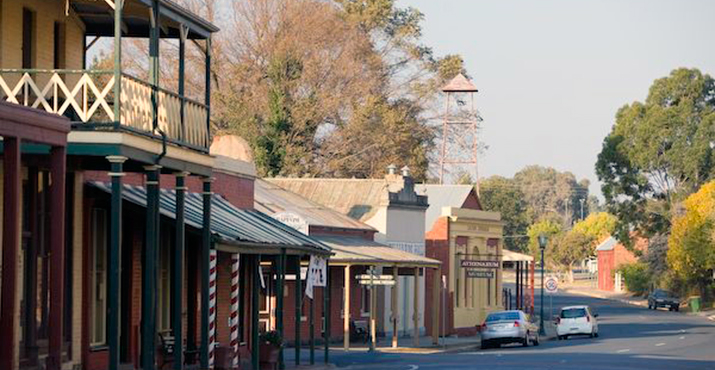
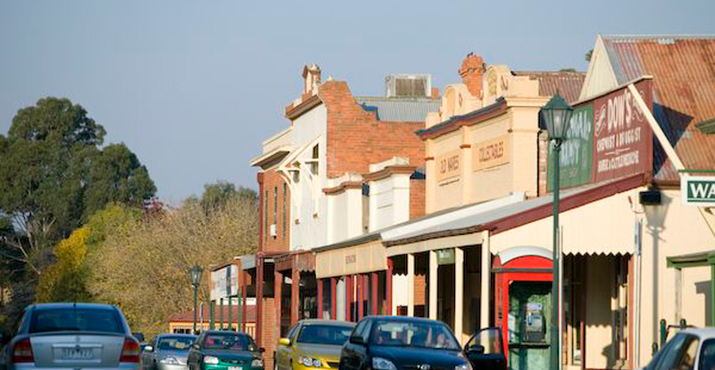
Like Beechworth, Chiltern is a beautifully preserved gold era town. It has three National Trust-owned properties and dozens of others that are heritage-listed.
These days it’s becoming known as a creative hub with a growing band of visual artists and artisans who are bringing new life to the historic town.
New accommodation choices are also popping up including very deluxe pods kitted out with plush queen beds at the Lake Anderson Caravan Park and the stylish Lazy Lockup, built in 1875 for the local constable (and his horse). Right next door gourmet food and wine is available at Posh Plonk in the totally
reimagined 120 year old Masonic Hall.
The Chiltern-Mt Pilot National Park surrounding the village is a magnet for nature lovers and birdwatchers searching for rare and endangered native birds like the Regent Honeyeater in the Box-ironbark forests. Sunrise or sunset are great times to soak up 360-degree panoramic views from the 537m Mt Pilot summit and a visit to nearby Yeddonba Cultural site with its ancient rock art, cave shelters and beautiful views is also a must.


Historic Sites
- Chiltern Court House
- Old Chiltern Police Residence and Lockup
- The Rex Fuge Historic Walk is a self-guided tour of the village including National Trust treasures like Dow’s Pharmacy and the Federal Standard Printing Works built in 1859.
Getting to Chiltern
About 3 hours from Melbourne via M31 Hume Fwy. VLine station at Chiltern on the Melbourne-Albury line. Beechworth is a 20 minute drive from Chiltern.
Visitor Information
 |
 |
 |
 |
 |
 |
 |
 |
|---|